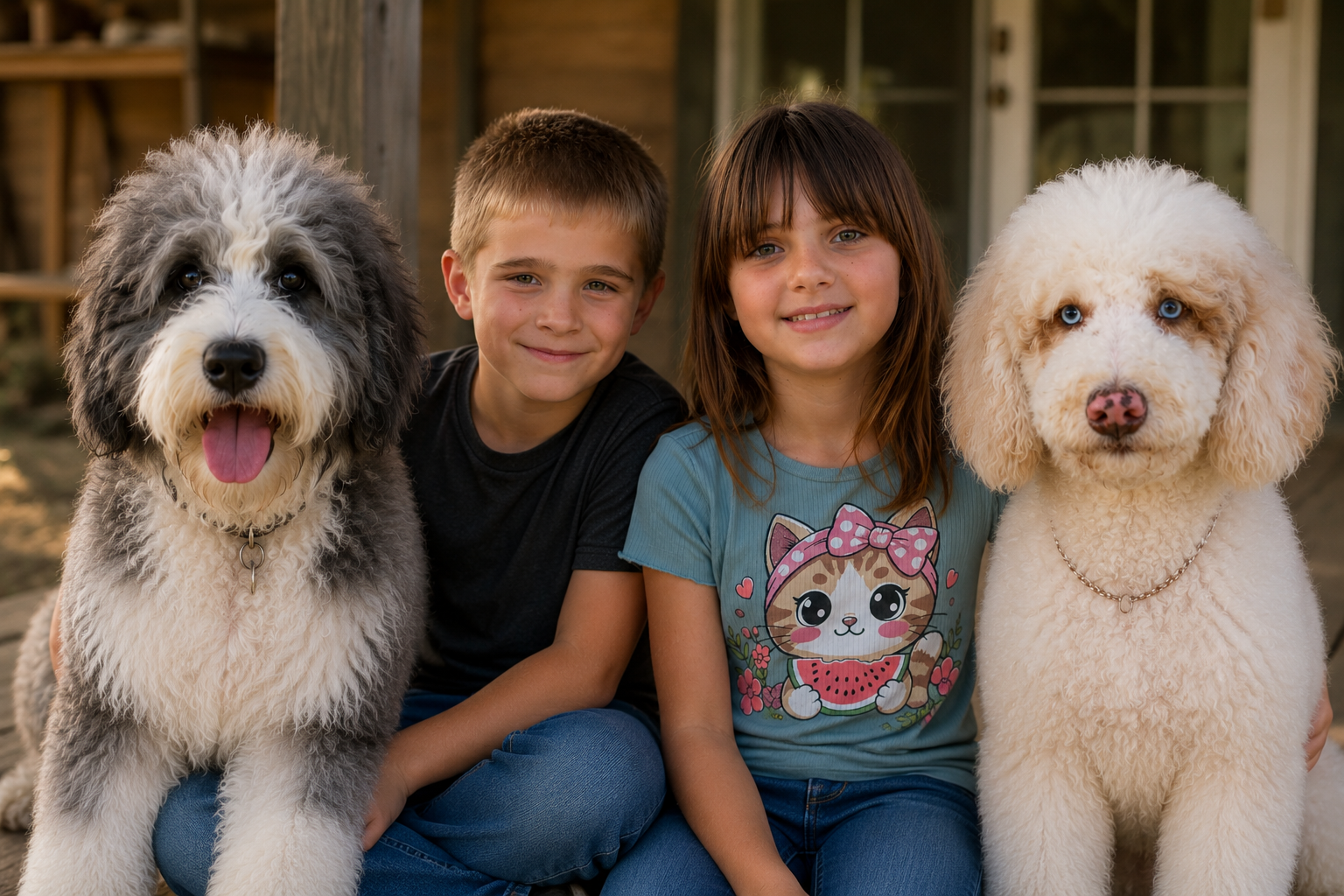
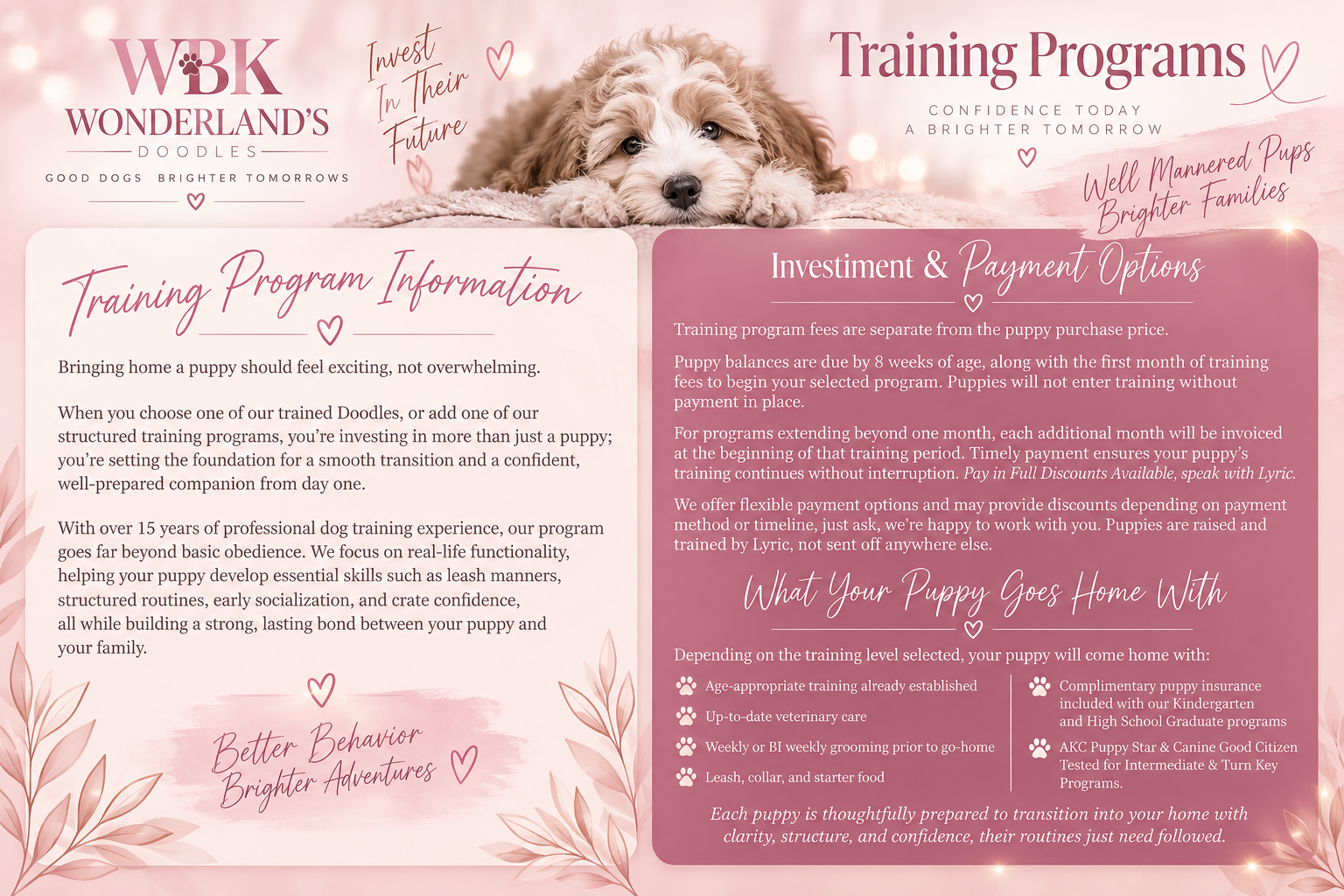
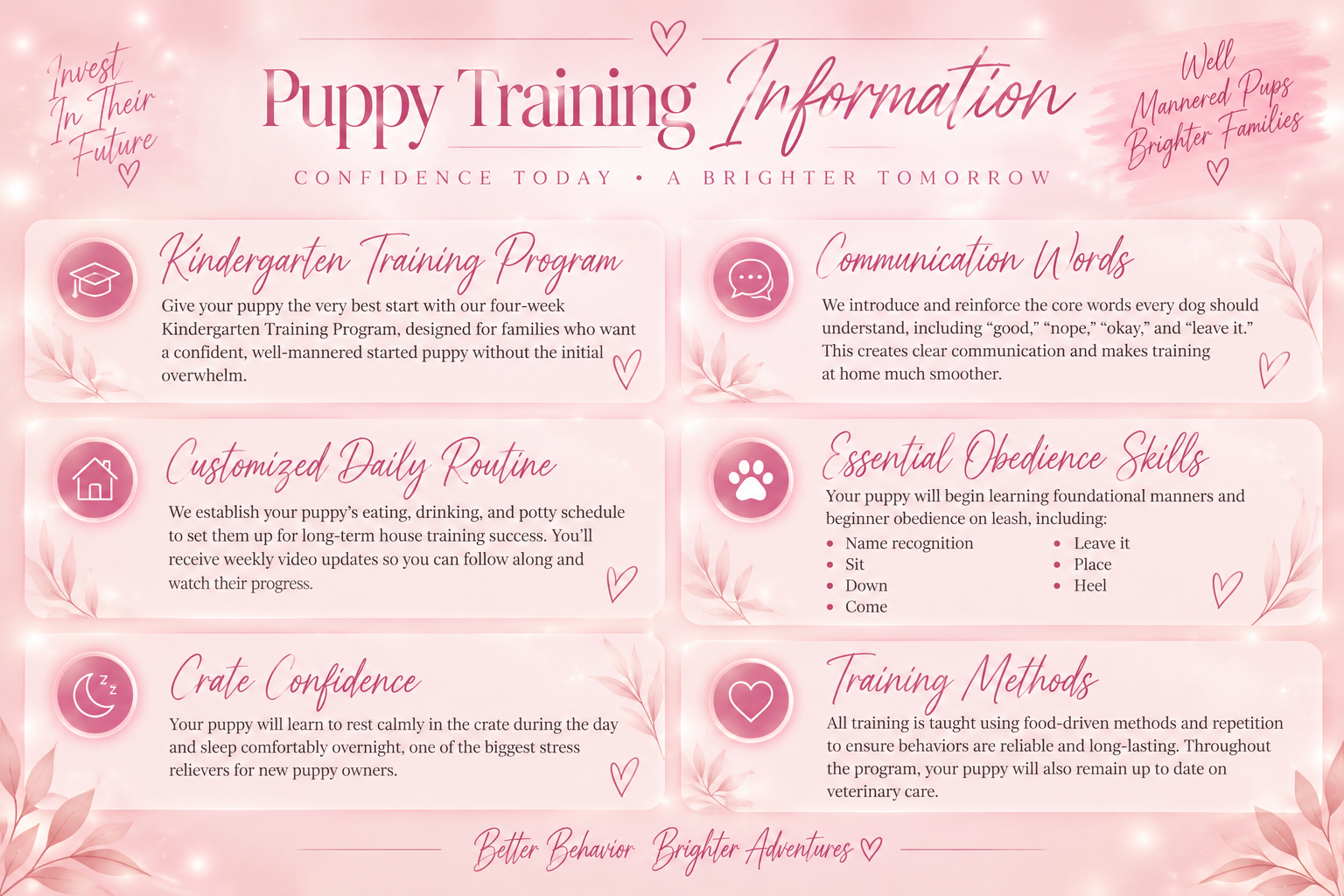
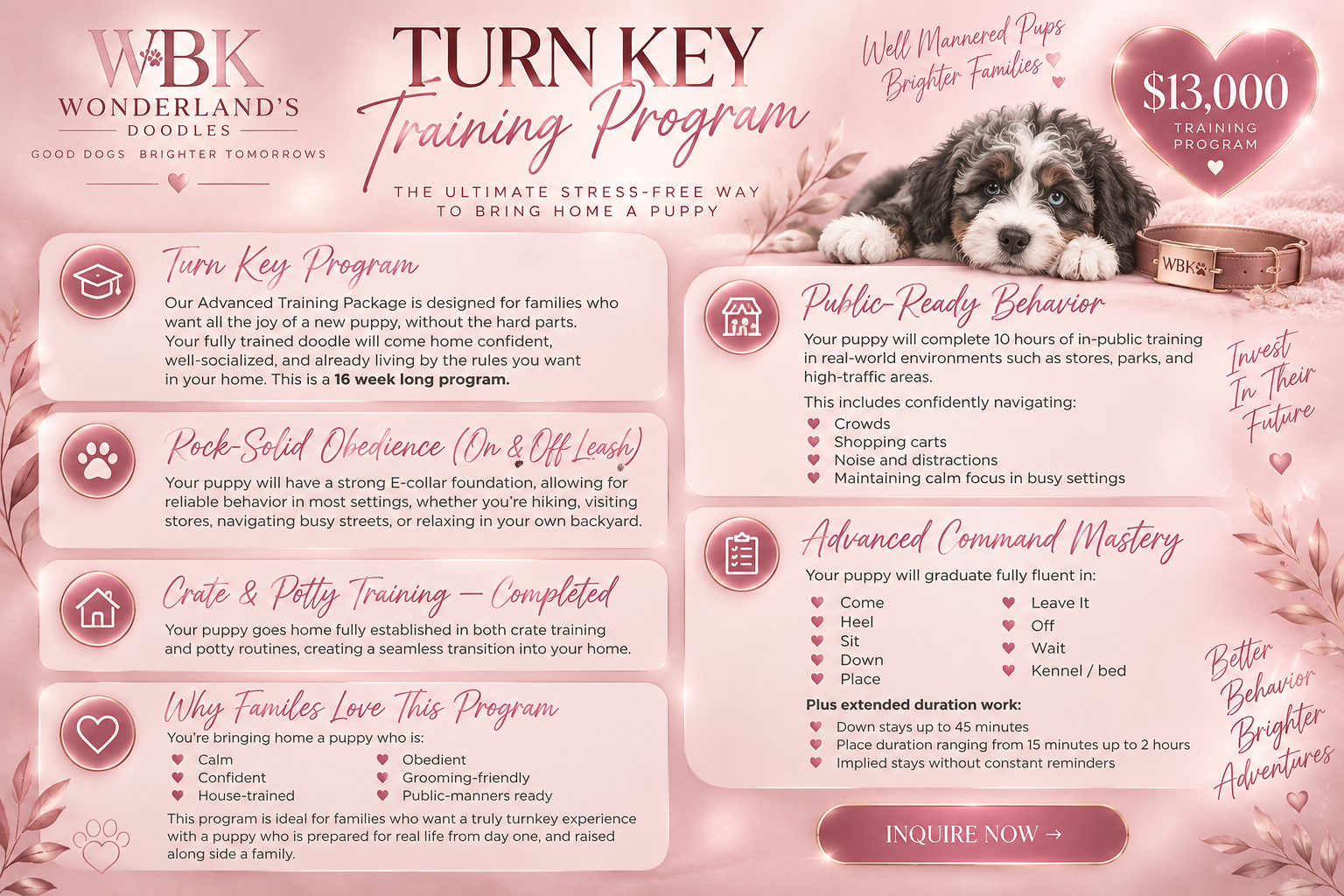
One Of Our Fully Trained Dog’s Pre Go Home.
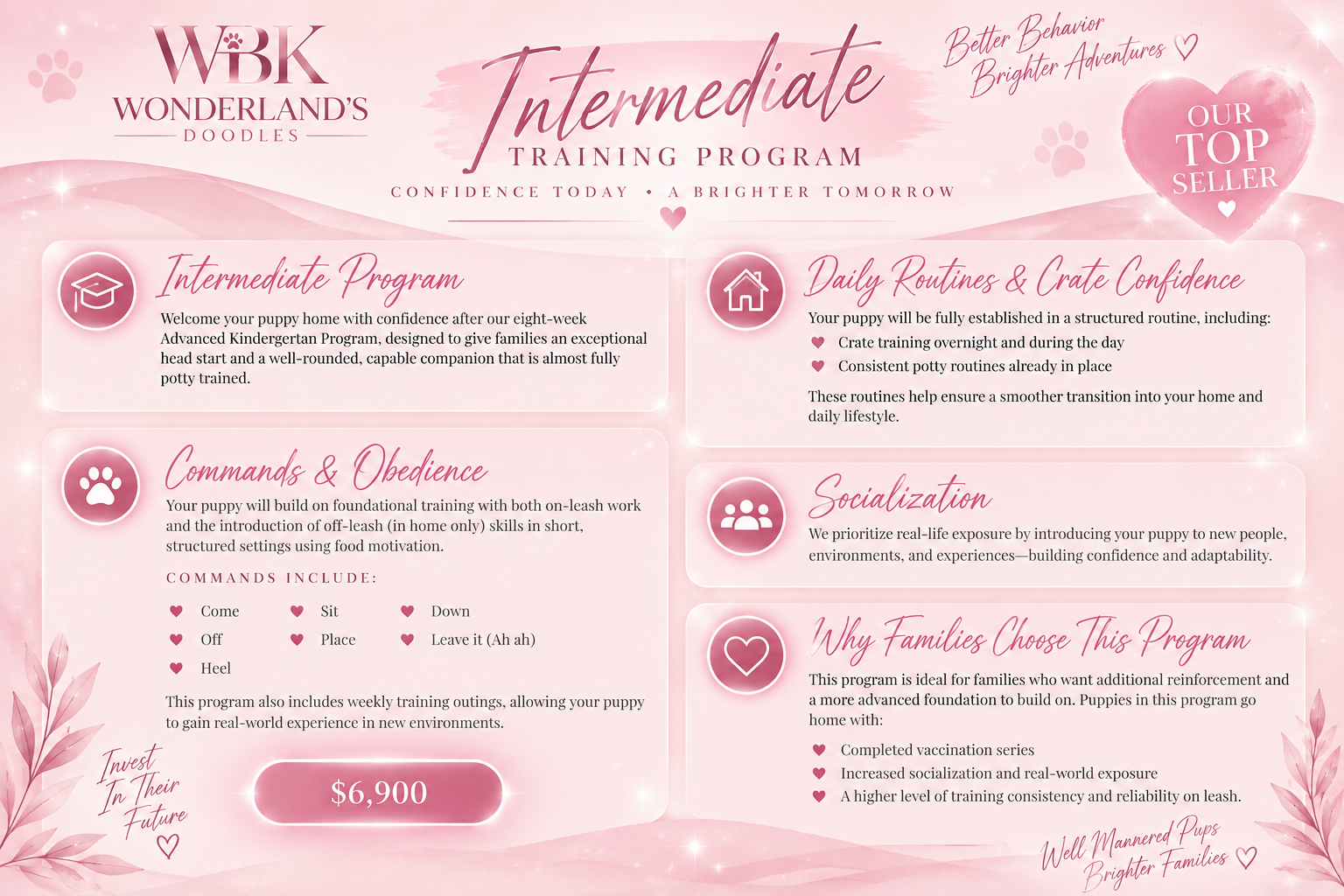
Advanced Kindergarten Trained Puppy
King, now Marley Owned by NBA Player.
Frequently Asked Questions
-
We do not use treats during training, we use only the puppies’ regular kibble that they are already acclimated to, which is Brothers Dog Food. Using their kibble helps keep sensitive puppy bellies stable, prevents unnecessary stomach upset, and keeps them highly food-motivated to work for their meals and training sessions.
-
When left unsupervised, we encourage families to fill their puppy’s Kong with peanut butter and place them in their crate. If you are unable to actively watch your puppy, they should be in their safe space. Our puppies are wonderfully acclimated to their crates and understand how to relax and settle comfortably inside them.
-
Bedtime for a 12-week-old puppy will vary depending on the household environment, but in our home puppies are typically settled into their crates by 9:00–9:30 PM and start their day around 5:30 AM.
The first week at home is usually an adjustment period, so we strongly encourage families to keep their puppy on a structured schedule and even offer a middle-of-the-night potty break if needed while they settle in.
Water is picked up around 7:00 PM to help reduce overnight accidents. Before bedtime, puppies are given a final 10-minute potty and stretch break, usually alongside littermates or one of our adult dogs. Once home, you will want to continue this routine by walking your puppy or pairing them with your resident dog for that final evening outing before bed.
-
Your puppy will already be acclimated to eating meals inside their crate. We encourage families to place the puppy into the crate first, prepare the meal, and then set the food bowl inside the crate without allowing the puppy back out during the process. This helps reinforce calm crate manners, structure, and patience around feeding time. The puppy will stay in the crate for one hour, and then go outside to go to the bathroom.
Not an Xpen or play yard, but a actual crate.
We also do not encourage using beds inside crates until puppies are roughly 4–6 months old. Young puppies are still learning bladder control and appropriate crate habits, and soft bedding is often chewed, shredded, or soiled during this stage.
-
Our puppies begin safe socialization very early. At 6 and 8 weeks old, they travel to their veterinary appointments in strollers, allowing them to experience car rides, new environments, sounds, and safe exposure while still being protected.
Before receiving their 12-week vaccinations, puppies are primarily socialized through trusted friends and family members visiting our property. For health and safety reasons, we do not allow the public to touch or directly interact with puppies until they are fully vaccinated.
After their 12-week vaccinations, we begin taking puppies on regular public outings in strollers and controlled environments to continue building confidence and neutrality. One of our favorite training and exposure locations is Home Depot because of the variety of sounds, smells, people, carts, and changing environments it provides. These outings help puppies learn how to stay calm, adaptable, and engaged with their handlers in real-world situations.
-
Following our closely monitored routines, schedules, training methods, and guidance is the best way to achieve results similar to what your puppy has already been taught here. If structure and consistency begin to fade, it is normal to see some regression in areas such as crate training, potty habits, confidence, or obedience.
Please remember that we have raised, imprinted, and trained this puppy from the very beginning. We know their personality, routines, motivators, and learning style better than anyone. Consistency during the transition into your home is what helps preserve the foundation that has already been built.
-
Yes! We believe early grooming exposure is an important part of raising a well-rounded puppy, especially for Doodles. While in our care, puppies receive mini grooming sessions every 1–2 weeks as needed. These sessions include nail trims, bathing, blow drying, brushing, ear cleaning when needed, and a sanitary tidy-up. This helps puppies become comfortable with the grooming process from an early age, making future appointments much less stressful.
If requested, we can also do a full groom before your puppy goes home. After joining their new family, we recommend professional grooming every 4–8 weeks, along with regular brushing at home to keep their coat healthy, comfortable, and free of mats. Our goal is for every puppy to leave us not only looking their best, but already familiar with the grooming routine they will need throughout their life.